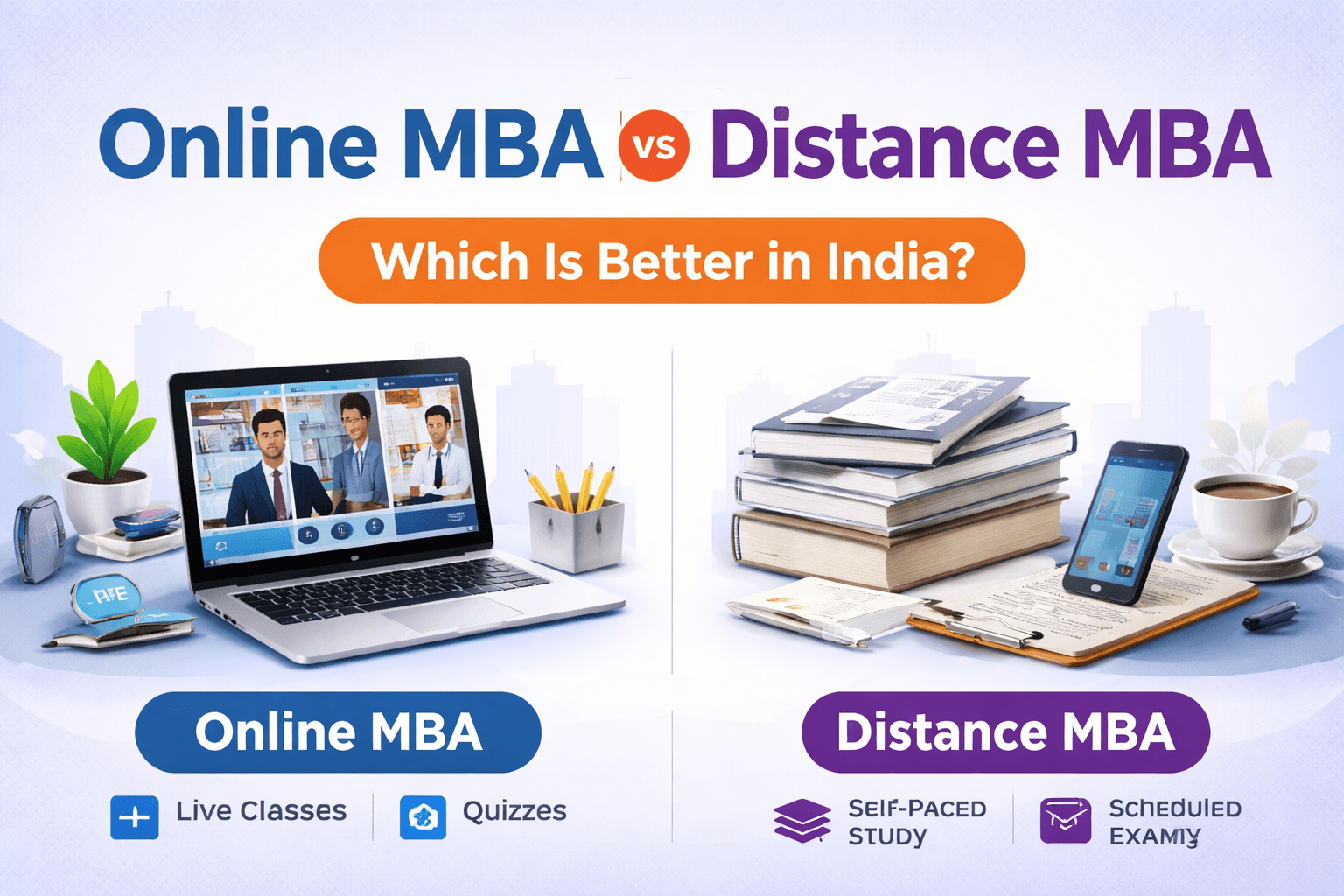
Confused about whether to choose an Online MBA or a Distance MBA in India? If you want flexibility with live classes, interaction, and UGC-DEB–approved options, an Online MBA is often better; if you need low cost, self-paced study without live sessions, a Distance MBA can still work but check university recognition before enrolling.
You will learn what each mode means, how UGC and DEB rules affect validity, and how both degrees fare for jobs, government exams, and higher studies. This article compares mode of learning, class format (live vs recorded), exams, flexibility, university approval, industry acceptance, and ideal candidates, then gives clear guidance for working professionals, government aspirants, and fresh graduates.
Use the comparison and real-world scenarios to match your situation, and consider talking to our counsellors for free guidance or comparing UGC-approved universities before choosing.
Understanding Online MBA and Distance MBA
You will learn how each mode delivers classes, how assessments work, and what to expect for recognition and flexibility. This helps you pick the format that fits your work, study habits, and career goals.
What Is an Online MBA?
An Online MBA delivers course content primarily through digital platforms. You attend live lectures or watch recorded sessions on a learning management system (LMS). Lectures are often scheduled in evenings or weekends, but many programs keep recordings you can replay.
Assessments include quizzes, assignments, proctored online exams, and project work. Interaction with faculty and peers happens via discussion boards, live chats, and group video calls. Some programs require occasional on-campus residencies, but many are fully remote.
Look for features that matter to you: real-time classes, faculty access, industry projects, placement support, and clear proctoring rules. Check if the program is UGC-DEB approved and whether the university lists industry tie-ups and internship options.
What Is a Distance MBA?
A Distance MBA follows an open and distance learning model where study materials reach you by mail or through an online portal. Classes are usually not live; you rely on self-study using printed notes, recorded lectures, or downloadable modules.
Exams are typically in-person at designated exam centers on fixed dates. Evaluation relies more on term-end exams and submitted assignments than on continual online participation. Interaction with faculty can be limited to scheduled counselling sessions, email, or regional study centers.
Distance MBA suits learners who need a predictable exam schedule and prefer self-paced study without frequent live sessions. Confirm the program’s accreditation, exam center locations, and whether the certificate carries the university’s regular degree title or notes the mode of study.
UGC and University Approval for MBA Programs
You need clear proof that an MBA comes from an approved university. The next parts explain what approvals matter, how validity works in India, and how employers and academic institutions treat these degrees.
UGC & DEB Approval Rules
The University Grants Commission (UGC) sets rules for higher education in India. For online MBA programs, UGC works with the Distance Education Bureau (DEB). DEB approves and lists universities that can offer online and distance courses.
Only universities listed on the UGC/DEB portal can run approved online MBA programs. If a program is not on that list, the degree may not be valid for jobs or further study. Private institutions sometimes claim affiliation; check the exact university name and DEB listing.
Regulations also require clear disclosure of fee structure, curriculum, and assessment methods. Live classes, recorded lectures, and internship options must match what the approved program advertises. You should verify the program page, UGC notices, and DEB approval before applying.
Validity and Recognition in India
If your MBA is from a UGC/DEB-approved university, it is legally valid across India. That validity covers employment, higher education, and professional registrations where a recognized MBA is required.
Degrees from institutions that lack UGC/DEB approval risk rejection by employers and universities. Some state public service commissions and central bodies explicitly require degrees from recognized universities. Courts and official notices have upheld this stance.
To confirm validity, check the UGC list and the university’s official notifications. Keep screenshots or PDF copies of approval pages for future use in job applications or admissions as proof.
Acceptance for Jobs, Government Exams, and Higher Studies
For private sector jobs, many companies accept UGC/DEB-approved online or distance MBAs, especially for mid-career hiring and skill-based roles. Recruiters often judge by university reputation, course content, and candidate experience.
Government jobs and competitive exams usually require degrees from recognized universities. If the exam syllabus or recruiting body specifies “regular” or “full-time” degrees, read the notification carefully. In such cases, even an approved online MBA may not meet that specific requirement.
For higher studies like PhD or executive programs, most universities accept UGC/DEB-approved MBAs. However, individual institutions may have additional eligibility rules, entrance tests, or minimum marks. Always check the target university’s admission criteria before relying on an online or distance MBA.
Online MBA vs Distance MBA: Detailed Comparison
You will find clear differences in how you learn, how you are assessed, what employers accept, and who each program suits best. Below, each key area explains practical facts you can use to choose the right path.
Mode of Learning and Classes
Online MBA: You attend classes through live video lectures, recorded sessions, interactive quizzes, and virtual group work. Many programs use learning platforms with discussion boards, live doubt-clears, and scheduled webinars. You need a reliable internet connection, a laptop, and time for synchronous sessions if your course includes them.
Distance MBA: You rely more on self-study using mailed or downloadable study material, periodic contact classes, and study centers for doubt-solving. Classes, if offered, are generally recorded or occasional in-person sessions at study centers. This model suits you if you prefer slower-paced reading and fewer fixed online meeting times.
Exams, Evaluation, and Flexibility
Online MBA: Exams often happen online with proctoring or timed assessments on the learning platform. Continuous evaluation through assignments, projects, live presentations, and proctored term exams is common. You get quicker feedback and can use project work to show practical skills.
Distance MBA: Evaluation mainly uses term-end exams at physical exam centers, plus assignments submitted by post or online. You get higher date flexibility but less frequent feedback during the term. This format lets you plan study around irregular work hours but may delay results and mentor access.
University Approval and Industry Acceptance
Online MBA: Reputable online MBAs usually carry UGC-DEB approval or university backing. Employers increasingly accept UGC-approved online degrees, especially when programs include live interaction, internships, or placement support. Check for explicit UGC/DEB listing and university reputation before enrolling.
Distance MBA: Many distance MBAs come from open universities with UGC recognition and are valid for jobs and higher studies. Some older distance degrees suffer lower industry prestige compared with top regular or well-known online programs. Confirm the university’s recognition and whether the degree states “distance” on the certificate, as rules vary.
Ideal Candidate for Each Program
Online MBA: Choose this if you work full-time and can commit to scheduled live sessions, want mentor access, and need interactive learning with peer networking. It fits professionals seeking faster skill application, internships, or placement help.
Distance MBA: Pick this if you need maximum time flexibility, have irregular work shifts, live in areas with poor internet, or prefer self-paced reading. It also fits those who need lower-cost options and can manage fewer live interactions.
Talk to our counsellors for free guidance. Compare UGC-approved universities before choosing.
Which MBA Is Best for Different Career Goals?
Choose the MBA type that fits your daily schedule, career timeline, and target employers. Below are focused recommendations for three common paths to help you decide based on work hours, exam needs, and hiring expectations.
For Working Professionals
If you work full-time, an Online MBA with live evening/weekend classes or recorded lectures often fits best. You get structured learning without daily commute and can apply new skills at work immediately. Check for UGC-DEB approval so the degree is recognised by employers and for promotions.
Look for programs that offer:
- Flexible class timings and recorded sessions.
- Project-based assessments and short-term industry projects.
- Career services like resume reviews and alumni networking.
A Distance MBA can work if you need maximum flexibility and minimal synchronous sessions. But many employers prefer online or regular program formats with clearer digital interaction and continuous assessments.
For Government Jobs and Competitive Exams
If you plan government service or UPSC/State PSCs, degree recognition matters most. Ensure the MBA is from a UGC-approved university. Some government recruiters and exam eligibility rules list only recognised degrees.
Prefer a program that:
- Clearly states UGC and DEB approval on the certificate.
- Uses term-end exams or proctored assessments accepted by public bodies.
- Provides a printed degree without “study mode” limiting phrases where possible.
A Distance MBA can be acceptable, but check the specific exam notice or employer notification. When in doubt, choose a UGC-approved online MBA or a regular MBA to avoid future eligibility issues.
For Fresh Graduates and Private Jobs
If you aim for campus placements or private-sector fast-track roles, program reputation and placement support matter more than mode. Recruiters look at university ranking, internship opportunities, and live interaction.
Prioritise:
- Programs with internships, live projects, and placement teams.
- Online MBAs that offer simulated interviews, live industry talks, and networking.
- Distance MBAs only if they include internships and employer tie-ups.
If you seek fast transitions into finance, consulting, or product roles, prefer institutions with strong campus placement records—even if that means choosing an online MBA from a well-known university over an unbranded distance course.
Real-World Scenarios and Practical Guidance
These examples show clear choices based on your work hours, exam goals, and job plans. Each scenario gives concrete steps you can take and what to expect from either an Online MBA or a Distance MBA.
Working Professional Example
You work 9–6 and want career growth without leaving your job. Pick an Online MBA if you need live interaction, scheduled classes, and faster networking. Live evening or weekend webinars let you attend without taking leave. Look for UGC-DEB approved programs that offer recorded lectures for missed sessions and industry projects for practical work.
Choose a Distance MBA if you need full schedule control and minimal live sessions. Distance programs suit shift workers or those with unpredictable hours. Expect printed or PDF study material, term-end exams, and project reports instead of weekly quizzes.
Action steps:
- Verify UGC-DEB approval before applying.
- Check class timings, recorded lecture access, and assignment deadlines.
- Ask your employer about study leave and support for project work.
Government Job Aspirant Example
You plan to sit for UPSC, SSC, or State PSC exams and want a respected MBA on your resume. A Distance MBA often fits better because it uses self-study and fixed exam windows, letting you dedicate blocks of time to exam prep. Most government agencies accept DEB-approved distance degrees for eligibility and promotion.
An Online MBA also works if it’s UGC-DEB approved, but ensure the program’s exam pattern and certificate wording meet the recruiting rules of the specific exam or department. For promotions in public sector units, confirm whether the employer accepts “online” or requires regular/distance formats.
Practical steps:
- Check notification language in upcoming exams about acceptable qualifications.
- Keep scanned copies of approval certificates and UGC/DEB listings.
- Plan study months around term-end exams to avoid clashes.
Private Sector Job Seeker Example
You aim for roles in marketing, operations, or finance in private firms. Employers often value skills and projects more than mode of study. Online MBAs with live classes, case studies, internships, and placement support give you practical exposure and networking opportunities.
A Distance MBA can work if you build a portfolio of projects, internships, or freelance experience. Private recruiters may ask about university reputation and project work, so highlight internships, certifications, and measurable achievements.
Do this:
- Choose programs with industry-linked projects or capstones.
- Prepare a portfolio showing results: campaign metrics, cost savings, or process improvements.
- Use LinkedIn and alumni networks to reach hiring managers.
How College Cosmos Can Help
College Cosmos helps you compare UGC-DEB approved programs quickly. You get a side-by-side list of universities, approval status, class format, and placement support to match your schedule and goals.
You can book a free counselling call to discuss deadlines, fees, and curriculum fit. Counsellors can review your resume and suggest programs that boost job readiness or exam eligibility.
Small practical benefits:
- Get a shortlist of programs that meet employer or exam rules.
- Receive tips for documenting approvals and preparing for term-end exams.
- Get support to plan study schedules that fit work or exam prep.
Verdict: Choosing Between Online and Distance MBA
This decision comes down to your work hours, need for live interaction, and career goal. Choose online MBA if you need structured live classes, regular assessments, and stronger industry ties. Choose distance MBA if you need maximum cost savings, self-paced study, and minimal live attendance.
Is Online MBA Better Than Distance MBA?
An online MBA often gives more real-time interaction. You get live classes, recorded lessons, and frequent online exams or assignments. That helps if you need deadlines and teacher feedback to stay on track.
Employers in many private firms prefer online MBA programs from UGC/DEB-approved universities because they mirror campus-style instruction and include projects or internships. If you want networking, placements, or company-facing projects, an online MBA usually helps more.
You must check UGC and DEB approval. Only take programs listed by UGC/DEB to avoid recognition issues for jobs or higher studies. If you plan to juggle a full-time job and want clearer industry pathways, an online MBA is typically the stronger choice.
When Does Distance MBA Make Sense?
Distance MBA makes sense when budget and flexibility matter most. It usually costs less and lets you study at your own pace using printed or digital study materials. Exams are often offline at exam centers, which suits you if you prefer self-study over live sessions.
Choose distance MBA if you already have steady work and don’t need strong campus-style networking or placement support. It also fits if you plan to use the degree mainly for knowledge, promotion within a current company, or qualifying for a role where formal mode of delivery matters less.
Verify university recognition before enrolling. For government jobs or some competitive exams, confirmed UGC-approved distance programs are acceptable, but check specific job rules. If cost control and time independence drive your choice, distance MBA can be the practical option.
Frequently Asked Questions
This section answers practical doubts about recognition, flexibility, work-study balance, placements, and suitability for government or private careers. Read each point to match the degree type to your career goals, study habits, and job requirements.
What are the key differences between an Online MBA and a Distance MBA?
Online MBA uses internet platforms with structured learning systems. It usually has video lectures, live classes, discussion forums, and an LMS (learning management system).
Distance MBA relies on mailed or digital study materials and self-study. It often uses recorded lectures, printed units, and fewer live interactions.
Online programs tend to include periodic live sessions, continuous assessments, and proctored online exams. Distance programs often use term-end or end-semester exams at designated centres.
University approval and regulatory status may differ. Many online MBAs are offered by UGC-DEB approved universities; some distance MBAs are from open universities with established recognition.
How are Online MBA and Distance MBA programs recognized in India for employment and further studies?
UGC and DEB set rules for online degree recognition. Only degrees from UGC-DEB approved universities are widely accepted.
Both UGC-approved online MBAs and distance MBAs from recognised universities are valid for jobs, higher studies, and many government recruitments. Check specific employer or exam authority rules first.
Some private companies may prefer regular campus MBAs for certain roles. For higher studies like PhD, universities often require the awarding university to be UGC-recognised.
Can working professionals benefit from pursuing an Online MBA or should they opt for a Distance MBA?
You can work full-time while doing an Online MBA if the program offers recorded lectures and flexible deadlines. Live classes can still fit evenings or weekends at many providers.
Distance MBA suits you if you prefer self-paced study with minimal live sessions. It works well when your job has irregular hours or travel.
Choose based on interaction needs: pick online if you want live networking and frequent engagement; pick distance if you need maximum self-study freedom.
In terms of flexibility and university approval, which is more suitable for students: Online MBA or Distance MBA?
Online MBA offers flexible schedules, on-demand videos, and quicker feedback through the LMS. Many UGC-DEB approved universities now run online MBA programs.
Distance MBA gives wide scheduling freedom and less frequent deadlines. Look for universities listed on the UGC or the official DEB approval list to ensure recognition.
If approval matters most, verify the specific program on UGC/DEB websites. Don’t assume all online or distance labels mean recognised degrees.
Are there specific advantages of an Online MBA for those aiming for government jobs and competitive exams?
Online MBA can help you balance study and exam prep because of recorded lectures and structured timelines. You can rewatch lectures and manage revision around exam schedules.
For many government jobs and competitive exams, the key requirement is that your degree is from a recognised university. An approved online MBA meets that need if the university is UGC-DEB listed.
Distance MBAs can also meet government job criteria if they come from recognised institutions. Confirm job notification rules for any mention of “regular” or “full-time” if that appears.
Do Online MBA programs offer better placement opportunities compared to Distance MBA courses?
Online MBA programs with active industry tie-ups and live projects often provide better networking and placement support. Universities that run campus, online, and corporate relations can share placement resources across modes.
Distance MBA placements vary widely and depend on the university’s industry connections and placement cell. Many distance programs lack campus placement drives but still help through alumni networks and online job portals.